
Phone: (647) 894 7706
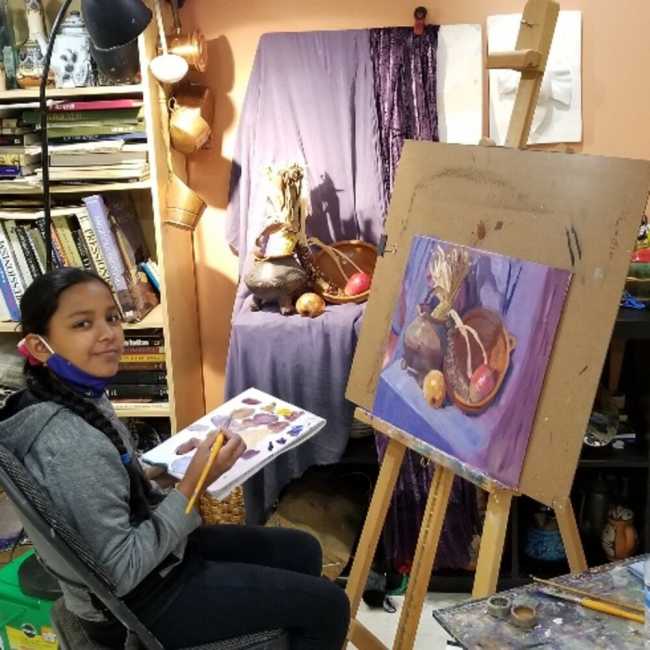
From glazing techniques to adding shadows, there is a lot that painting classes can teach you. One of the essential concepts they focus on is negative space.
Negative space refers to the empty area that surrounds the central subject of a painting. This space is necessary in making the subject stand out while ensuring the creation of a more balanced and visually engaging painting.
At VR School of Art, North York’s best art class for beginners, we introduce our students to negative space early to enhance their composition skills.
Negative space is the empty area around or between any two or more objects in a painting. Painting classes in Toronto, like ours, teach this technique to students so they can learn how to observe the varying shapes empty spaces form around objects on canvas. This can give them a good idea of realistic proportions while allowing the painting to breathe.
That said, most beginners tend to focus only on the subject of their painting instead of considering the area around it. This often leads to proportion errors and cluttered compositions that look unbalanced.
Our art classes in Toronto help students understand the importance of negative space by educating them about its contribution to the creation of an impressive and well-balanced artwork.
We train our students not to view negative space as “empty” space. Instead, they are encouraged to look at the background as a collective of shapes. This shift in perception improves the proportional accuracy of the subjects they paint on canvas.
Negative space can be used as a comparison point to judge the size, angles, and placement of various objects in the painting. This eliminates guesswork.
Paintings that do not make clever use of negative space tend to look crowded. However, we teach students how to use it to their advantage so that the elements in their artwork get to breathe in harmony.
Understanding how to use negative space can help beginner artists transition to the next level. Not only does it shape their perspective, but it also helps them get a stronger hold of proportions, thus leading to the creation of clutter-free compositions that look harmonious.
VR School of Art’s painting classes in Toronto are taught by experts who can help students practice negative space and other useful techniques in their composition. Contact us to learn about our class schedules, available courses, fee structure, and more.
No. Smart use of negative space allows the painting to breathe while making it look more intentional, clear, and well-balanced.
Both approaches are acceptable. Even if students plan for negative space, it might take shape on its own as the painting progresses.
Yes. Leaving space around the main subject of a painting instantly puts it in the spotlight.