
Phone: (647) 894 7706
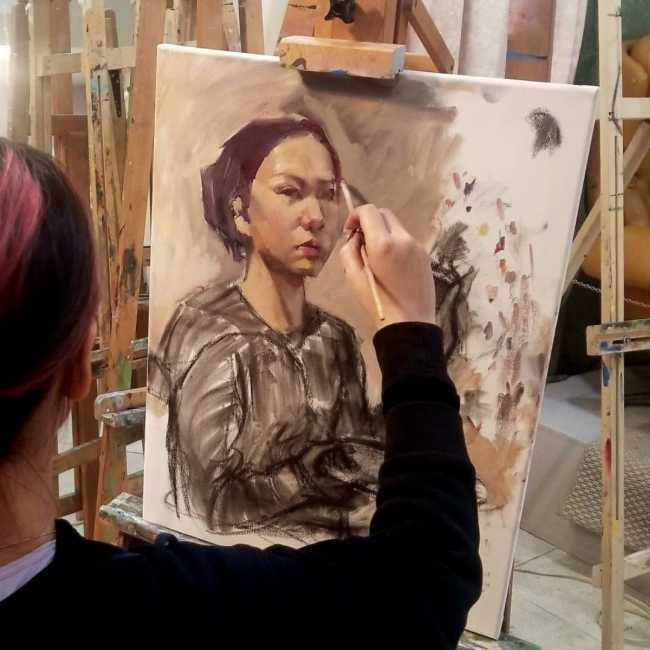
4 essential shadow techniques to try out during portraiture are the shadow beneath the eye sockets, the shadow under the nose, the shadow above the upper lip, and the one below the lower lip. These are vital to get realistic portraits during drawing classes. To elaborate further, VR School of Art, a leading art school in Toronto, Ontario, offering drawing and oil painting classes, explores the importance of these 4 shadows in detail.
The shadows beneath each eye socket are an important part of drawing portraits because they help define the depth of the eyes. It does so by highlighting it against the skull.
The shadow under the nose is a major detail to add during portraiture oil painting classes, as it helps clearly differentiate it from the mouth. The shadow does so by highlighting the protrusion of the nose.
Any realistic portrait has to show a small shadow above the upper lip. This is because it does not receive much light when compared to other regions of the face. Hence, this shadow helps define the volume of the mouth.
Lastly, the shadow beneath the lower lip is vital to defining the structure of the lower lip. It also helps to add a clear demarcation between the lower lip and the chin.
To summarize, mastering these 4 shadows is key to achieving a striking and realistic portrait during oil painting classes.
To learn more about portraiture and other types of painting disciplines, reach out to us at VR School of Art today. As one of the leading art schools in Toronto, Ontario, we offer drawing classes for kids and adults alike. Contact us at 647-894-7706 to get started.
Consider placement, form, cast, and temperature when drawing shadows for portraits.
Form shadows have a softer and curvaceous profile, whereas cast shadows have a sharper edge.