
Phone: (647) 894 7706
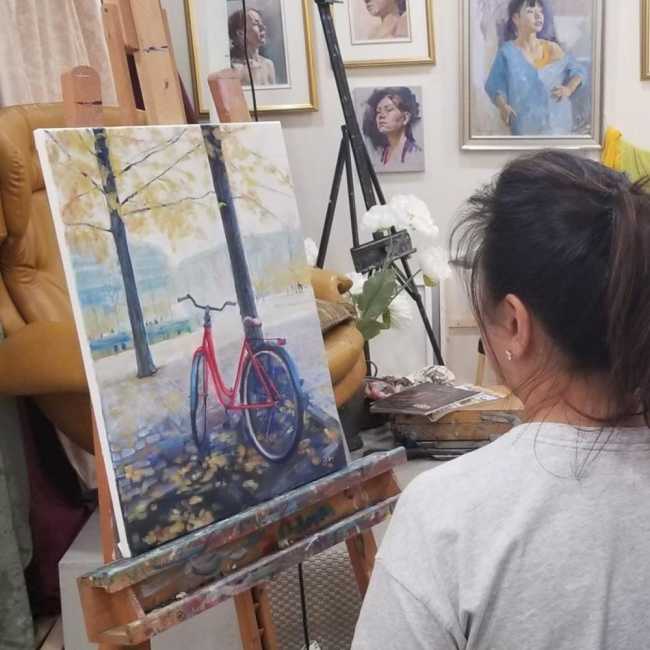
In theory, most students find it easier to paint non-living objects than life models. While there might be some truth to it, it entirely depends on the structural complexity of the object in question. For example, a ceramic cup or a wooden chair might seem simple enough at face value, but how they respond to light can make it challenging to represent them accurately on canvas.
That’s why learning what to look for and then representing it accurately is important for students. In today’s blog, VR School of Art – a popular North York art studio- will give you 5 tips on painting non-living objects more convincingly.
Here are 5 critical tips that will help you bring non-living objects to life during your painting classes in Toronto:
While outlines are essential for understanding where objects end, they do not define their volume. Capturing the planes, curves, and the direction changes of an object makes it look more realistic on canvas.
The way light and shadows fall on an object can change depending on its shapes and materials. For example, metal surfaces produce sharp highlights, while wooden materials give rise to softer shadows.
Glass, fabric, wood, ceramic, etc. – each of them has a different texture that can affect their highlights, edges, and surface marks. That’s why textures should be painted where they are actually visible rather than uniformly.
The object’s visual context and how it interacts with nearby surfaces can alter its reflections and impact its edges and apparent value. Factoring them in can make a painting look more cohesive.
Even if an object is extremely intricate, simplifying specific sections of it is still allowed to make the painting look less cluttered. Only include details that add visual value to the painting.
Whether you take beginner or advanced art courses in Toronto, these five tips form the foundation of painting non-living objects. If you want to learn how to translate them onto canvas, take one of our classes. VR School of Art’s painting programs are open to Toronto students of all age groups and skill levels. Contact us to enquire about the best art course for you.
The key is to focus on overlapping shades, reflections, distortions, and value changes to accurately represent glass objects on canvas.
Painting the value changes of an object across its planes and surfaces can create the illusion of volume and depth.
No, it is not. Artists can choose to paint the background or the object first depending on the medium and techniques they use.