
Phone: (647) 894 7706
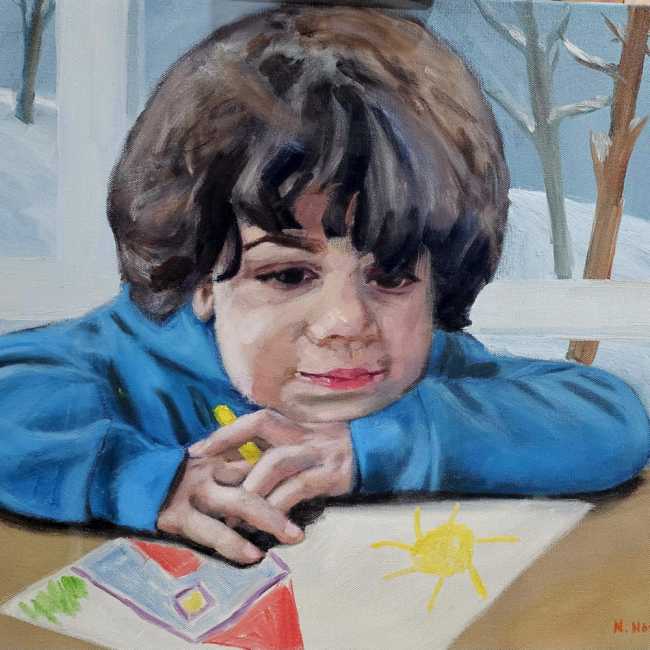
When students think about life model painting, they tend to exercise their observational muscles first. But mastering figure painting takes more than that. It is important to use the right technique and the right brushes to achieve realistic results.
After all, putting color to canvas can affect the painting’s structure, light and visual focus. That is why knowing when to use thin and thick paint is critical.
At VR School of Art, Toronto’s leading art school, we encourage our students to treat paint handling as an integral part of life model creations to ensure the final artwork looks real and natural.
The goal should be to strike a balance between both paint types as each of them is essential for faithfully representing the subject of a life model painting on canvas.
Teachers at our painting classes in Toronto always tell students to start with thin paints. Using thin paint is useful in establishing the proportions of a painting. It can also help in determining the placement of the subject, their gestures, and their relationships with surrounding objects without setting anything in stone. Basically, using a thin paint at this stage makes editing the painting easier.
Once students get a clear idea of where their painting is heading, they can introduce thicker paints and brushstrokes in a more intentional manner. The general practice among artists is to use thicker paints and strokes for areas of emphasis and to create visual variety and contrast.
Uniform surface treatment can make the painting look flat. That’s why the experts at our art courses in Toronto suggest varying paint thickness to enliven the artwork. The key is to use different paints depending on the role that particular object plays within the composition.
Paint thickness, brush pressure and type, and layering can make a huge difference to a life model painting. Hence, it is critical for students to ensure the final figure on canvas features both the softness of thinner passages and the solidity of thicker ones. VR School of Art’s painting courses in North York, Ontario teach students everything there is to know about life model painting. Contact us to learn about our programs, their area of focus, eligibility and more.
A realistic figure painting combines both thick and thin brushstrokes to look lifelike and pleasing.
Because removing excess paint from a canvas can help in the simplification of various forms in the composition so that its primary structure can be clearly established.
Yes. Especially if thick paints have already been used. Heavy paint application makes it harder to rectify compositional errors.