
Phone: (647) 894 7706
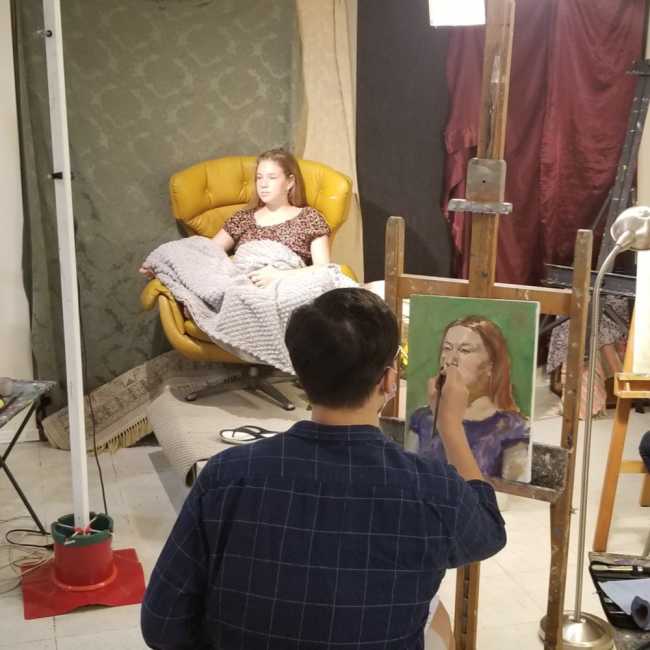
Many art students are surprised to learn that pose lengths of life model painting can vary. In fact, they come in four major variations, and each type of pose supports the development of a different artistic skill.
At VR School of Art, North York’s only European art-inspired school, we use different types of pose lengths to teach students how to capture movement, refine anatomical detail, and much more. In today’s blog, we will discuss varying pose durations and the purpose each of them serves. Let’s begin!
Lasting anywhere between a couple of minutes and a couple of hours, pose length art courses in Toronto follow a structured progression to help students learn and eventually refine the skills required to create realistic life model paintings. The four major types include:
The starting point of life model sessions, gesture poses adopt the shortest duration of anywhere between 30 seconds to 4 minutes. The purpose of these sessions is not accuracy or detail. Instead, they help students understand:
Gesture poses let students capture the essence of the subject in front of them as quickly as possible.
Extending the time of poses allows students to grasp slightly more complex concepts. They can use the extra time to form:
Efficiency and structural accuracy are the goal of short poses.
True artistic exploration begins with medium poses. These are used to establish:
At this stage, students are encouraged to draw more detailed artwork.
Only advanced drawing classes make use of long poses. Their purpose is to help students:
Long pose sessions typically span multiple classes and are all about achieving realism, if not perfection.
As is evident, each pose length helps in the development of a different set of skills, and each is equally valuable – especially if students are keen on mastering life form paintings. At VR School of Art, Toronto’s top art school, we employ all four pose durations to help our students progress through the various stages of model painting. Contact us to learn how our classes support the acquisition of both speed and refinement when creating artwork.
Do models hold exactly the same position during the entire length of a long pose study?
Yes. However, they take frequent breaks before returning to the same position with the help of visual references.
Beginners are taught with the help of gesture and short poses, as they encourage observation without pressure.
They practice both to master different skills. Quick sessions help them develop speed and decision-making, while longer studies allow refinement and perfection.