
Phone: (647) 894 7706
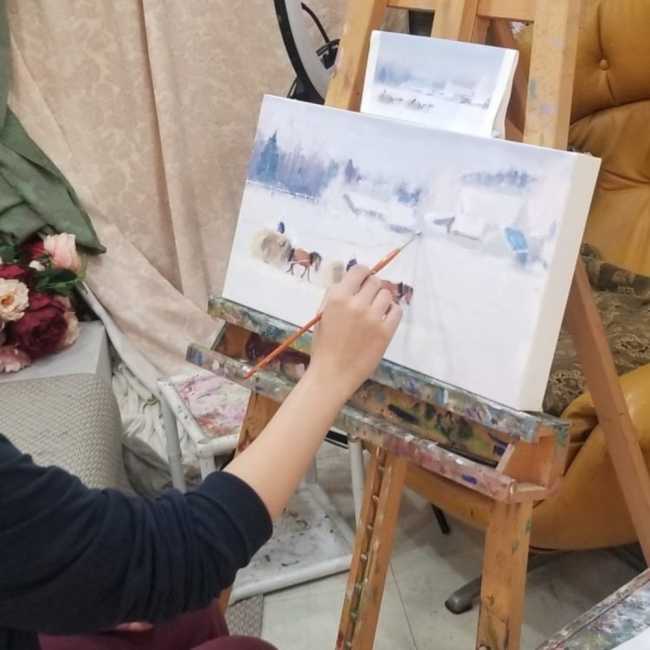
For beginners, this must come as an absolute surprise, but most finished paintings have a painting hidden underneath them. This is known as underpainting, and it is responsible for giving the final artwork a richer, more vibrant, and more refined appearance.
Most good art schools in Toronto, such as VR School of Art, emphasize this technique, using it as a roadmap to help young painters organize the value and form of their compositions before adding the final layer of color.
In today’s blog, we will highlight why underpainting is necessary to create more intentional and structured oil paintings.
Simply put, underpainting is the first layer of paint applied on the canvas. This layer is just the starting point of the entire composition and is used to map out its major shapes and color relationships. Many professional artists use only a single base, neutral color for their underpainting and then build upon it gradually.
Art schools in Toronto encourage students to start with underpainting because it helps resolve visual, focal, and framing issues early in the process. Editing finished artwork is extremely difficult and might require a complete do-over. Underpainting prevents that scenario from ever cropping up by allowing budding artists to adjust their painting’s proportions and values while it is still in the development stage.
There are two major benefits to underpainting. These include:
Even if certain portions of the underpainting are visible, students have nothing to worry about, as they only add character to the finished artwork.
Underpainting is not an extra step. It is the very foundation of a visually cohesive and structured artwork. Using the technique of underpainting can help students establish structure and a visual point of interest in their painting before filling it with color. Most good art schools will never skip this lesson, just like we don’t. At VR School of Art, Toronto students get access to only the best oil painting lessons in North York. Contact us to learn how our classes help in honing the artistic skills of your child.
Although it depends entirely on the artist, beginners and learners are advised to use underpainting as the foundation for their artwork.
Neutral colors are preferred, whether of a warmer or cooler temperature, due to their ability to blend into the background of the painting.
It might show through if the final layer is thin, thereby influencing the finished painting’s overall depth and color harmony.