
Phone: (647) 894 7706
The brainchild of the renowned French painter Claude Monet, Impressionist paintings have been capturing the imaginations of admirers for the last 200 years.
What’s most striking about Impressionist artwork, their color techniques aside, is how different they look depending on where you are standing. Up close, these paintings look like a careful curation of visibly separate brushstrokes and color patches. Step back, and these individual marks seem to dissolve to form a very cohesive and visually appealing artwork.
Today, VR School of Art, Toronto’s preferred art school to learn Impressionism, will reveal the secret behind the distinct visual effect of Impressionist paintings.
Observation is an integral part of each of our art courses in Toronto. That’s why when teaching Impressionism to our students, we encourage them to closely view famous paintings and see what makes them tick.
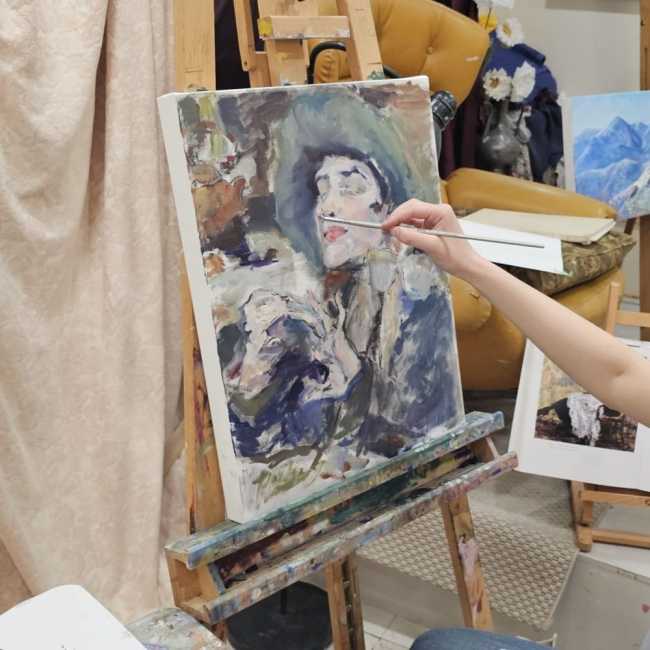
Impressionist paintings, when viewed up close, reveal visible brushstroke patterns instead of smooth transitions that may make individual patches of color appear disconnected. That said, they make for very active and textured artworks that are full of intentional color decisions.
When the viewer steps back from the painting, the previously broken blocks of colors merge into larger visual relationships that look more cohesive and intentionally organized. Smaller brushstrokes are no longer visible. Instead, what can be observed is an interesting interplay of light, atmosphere, and movement.
The reason why Impressionist paintings are able to evoke two entirely different sets of atmosphere based on the distance they are viewed from is because of their distinctive brushwork style.
Impressionists use the ‘broken color’ technique to place related colors next to one another and to make the viewer’s eyes move from one section to the next. The visible brushwork gives the painting a sense of energy that is suggestive of motion. That is why the final artwork looks so dynamic from every angle.
Impressionism is one of the most beautifully expressive and energetic art forms out there. At VR School of Art’s expert-led oil painting classes in Toronto, we teach budding Impressionist painters how to create canvases that emote light, color, and movement. Contact us to explore our guided art courses.
There is no ideal distance. Impressionist paintings should be viewed both up close and from a distance to truly appreciate their ingenuity.
Not necessarily. The idea is to paint variously sized marks to create distinct atmospheres and color relations.
Of course! Impressionism as an art form still lives on, and students are encouraged to emulate its techniques in structured art courses.