
Phone: (647) 894 7706
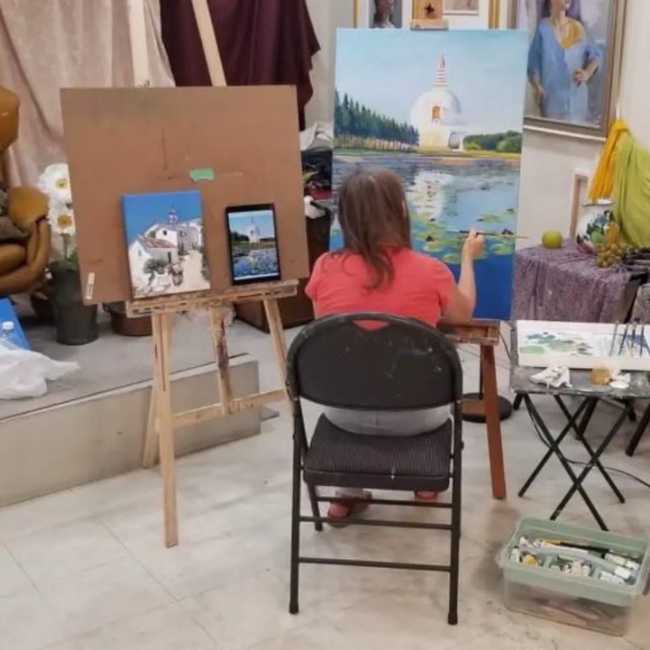
Whether you are a beginner or an advanced student, everyone almost universally agrees that oil painting is a complex affair where multiple factors play a part in determining its outcome, such as paint consistency, brushstroke techniques, etc.
One of the most critical factors among them is its drying time. Oil paintings are famous for taking more time to dry than acrylic or watercolor artworks, which dry in minutes.
That said, new students need not be deterred by its extensive drying time. Instead, the top art schools of Toronto, such as VR School of Art, use it as an opportunity to teach students that drying is a part of the process of oil painting, leading to greater artistic control and refined results.
During their oil painting classes in Toronto, students will learn that the time it takes for the paint to dry is actually a chance for them to perfect their artwork. Here’s how:
Since oil paint stays wet far longer than any other type, students can use this time to fine-tune the colors on their canvas. They can either create subtle transitions or refine existing blends to add more depth to their painting. It also makes it easier for them to revisit and refine sections of their painting before they fully set.
A single artwork can take several oil painting classes to finish. This gives budding artists the chance to take a step back and observe their work as an onlooker, thus imparting to them the perception they need to edit and refine specific sections of their painting. From softening edges to adjusting proportions, the slow pace of oil painting prevents rushed decisions.
The prolonged drying time encourages students to slow down and evaluate their paintings objectively instead of treating them as a race against time. By inculcating patience in them, it enables students to plan the next layer of their painting more carefully, ensuring they make thoughtful adjustments only.
Oil painting is not just another skill to develop. It’s a soulful experience akin to a conversation between the canvas and the artist. The time it takes for the painting to dry only deepens that conversation, leading to the creation of an artwork that feels more intentional and cohesive from every angle. VR School of Art’s oil painting classes in Toronto help students develop and deepen their love for oil painting. Contact us to enroll in our classes that are led by renowned artists with decades of experience.
No. Paces of different pigments may vary and may influence how artists plan their next brushstroke.
It certainly can be, as it allows students to observe their work and make more mindful adjustments that truly refine the outcome.
Absolutely. The longer drying time allows artists to work on more than one painting simultaneously.