
Phone: (647) 894 7706
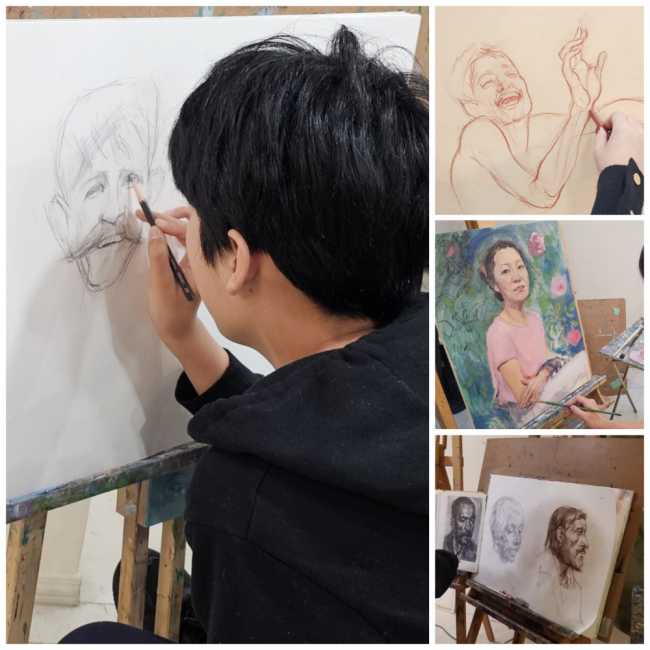
One of the most interesting facets of portraiture painting is that it can be expressed via a variety of mediums. Students have the flexibility to capture facial angles with the help of pencils, charcoal, paints, and so much more. In fact, the materials a student chooses can dramatically influence the impression a finished artwork creates on onlookers.
Based on what they wish to communicate via a finished canvas, students must choose their materials carefully. Toronto’s leading art school, VR School of Art, will explore portraiture drawing materials in today’s blog, showing how they contribute to its form, value, color, and expression.
Drawing classes encourage students to experiment with different materials when working on portraits. Common ones include:
Known for its warm, reddish-brown color, sanguine chalk has been used to create outstanding portraitures since time immemorial. Its earthy color makes artwork look more softer and natural, especially when compared with traditional graphite drawings. Sanguine chalk is a great medium to explore value transitions, modelling, and skin tones.
Charcoal is actively encouraged in portrait studies, primarily due to its ability to create striking expressions and strong values. Students can use it to create impressive transitions between the lighter and darker areas of a painting.
A pencil is a great starting point for portrait studies. It provides precise control and can be used to create beautiful facial structures and proportions. It also encourages experimentation with line work, shading, hatching, and tonal modeling.
Drawing classes for kids also eventually introduce students to watercolor portraiture painting. This allows students to explore how color layering and variations impact the appearance of a portrait’s face or hair.
Acrylic and oil paints are a great way to study the role color plays in developing lifelike portraits. These two mediums also help students sharpen their brushwork and understanding of color relationships.
Experimenting with multiple materials allows students to find their own artistic style in portraiture. It also gives them an idea of how each material responds in their hands, producing an entirely different result on canvas.
At VR School of Art’s collaborative and expert-led studio in North York, Ontario, we teach students everything they know about portrait studies. Contact us to give your kids the opportunity to discover different artistic techniques that are an essential part of portrait creation.
Pencil and charcoal are excellent starting points as they are easier to control. Beginners can eventually move on to other mediums as their skills advance.
The selected medium influences paper choice. For example, a standard drawing sheet is good for pencils, while the use of sanguine chalk or charcoal might require thicker paper.
Yes, mixed-media portrait studies are a part of portraiture drawing classes, and they focus on combining materials that work together.