
Phone: (647) 894 7706
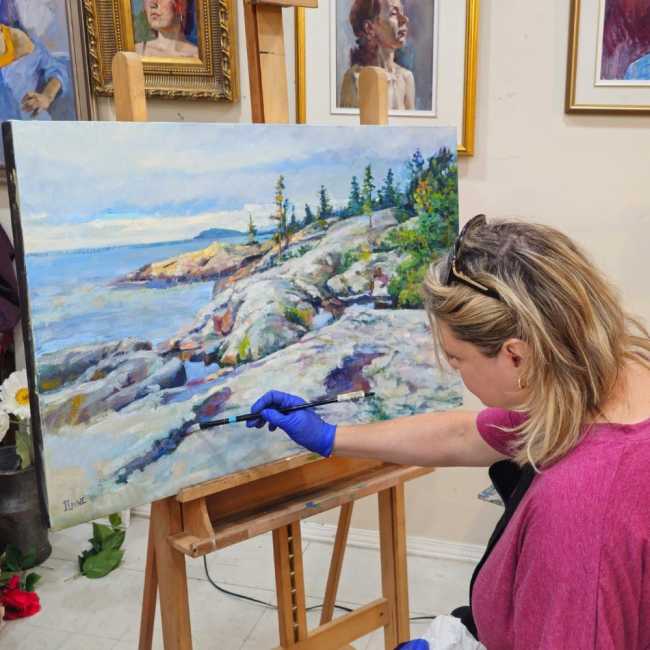
Whether the agenda is to create a professional art portfolio or to pick up a new constructive hobby, joining an art class is a deeply profound and fulfilling experience. Not to mention, highly technical and educational as well.
For first-timers, one of the most difficult aspects is learning brush control, with most initial strokes being either too heavy, uneven, or extremely light. That said, getting it right is not a Herculean task if you have the right teachers guiding you.
In today’s blog, VR School of Art – providers of professional art courses in North York, Toronto- will give you a sneak peek into how we help our students practice and perfect their brush strokes.
Art courses in Toronto offered by VR School of Art focus on helping beginners master the basics before they can move on to advanced levels. Here is how we teach brush control:
We make our students diligently practice straight lines, curves, and pressure variation. This helps them develop a stronger understanding of how the brush reacts to different movements and intensities, thus helping them build the muscle memory needed for painting accurately.
Striking the right balance between paint pressure and paint load is a critical skill that we impart to students. We demonstrate how applying too much pressure can result in messy strokes as opposed to controlled pressure, which gives rise to cleaner lines.
Our art classes in Toronto are also a great place to learn brush angles. During class, our teachers educate students about brush positioning and how different angles can help in the creation of thin lines, broad strokes, or textured effects.
To wrap up, brush control is not about achieving the perfect strokes on one’s very first try. It is about blending control and intention to create textures and lines that contribute positively to the theme of the artwork.
At VR School of Art, we provide Toronto art students the kind of structured guidance they need to learn how to paint confidently. Contact us to explore our instructor-led painting classes for kids and adults.
It can take a few weeks of consistent practice to develop the hand coordination and confidence needed to paint with accurate brush strokes.
Yes. Factors such as the shape of the brush, its size, and bristle type play a role in how paint is transferred onto canvas. At VR School of Art, students get to learn about all types of paint brushes and their applications.
Primarily, yes. But since brush control improves overall hand coordination, this acquired skill can be transferred to other forms of art, such as sketching, for example.