
Phone: (647) 894 7706
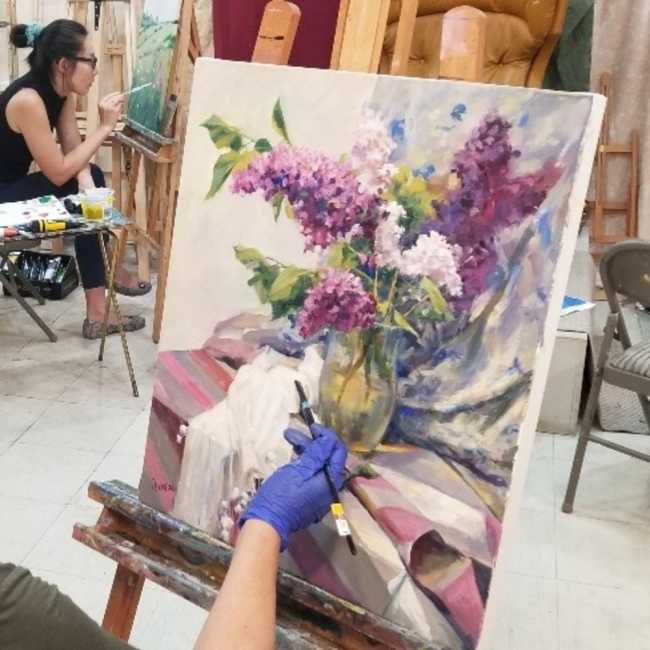
To refer to brushstrokes as marks left on a painting would be doing it gross disservice. Each brushstroke is an expression. It communicates the intention of the artist – how they wish to relay the texture, depth, movement, and mood of a painting.
While every student knows about different types of brushes, did you know there are different types of brushstrokes too? Comprehensive drawing classes in Toronto, such as the ones VR School of Art provides, teach students how to choose the right brushstrokes so that their paintings look exactly how they envisioned them.
Let us tell you about the different brushstrokes artists use in today’s blog.
Top Toronto art schools, such as VR School of Art, always strive to provide students with the right type of guidance. This includes helping them realize that using the right brushstrokes is just as important as mixing the right colors. Allow us to introduce you to common brushstroke types:
Responsible for creating smooth transitions between different colors or sections of a painting, blending is the perfect technique for painting skies or gradual shifts in light. Blending leaves no visible brushstrokes.
Dry brushing is perfect for adding broken or textured marks to a painting. This technique uses very little paint, which makes it great for fleshing out rough surfaces such as rocks, tree bark, grass, etc.
Scumbling uses a dragging motion to spread a small amount of opaque paint onto a dry canvas. This brushstroke allows the surface layer to show through, creating an atmospheric painting with more realistic clouds, foliage, and distant landscapes.
Glazing is a thin, transparent top layer applied over already dried paint or a dry surface, leaving the layer underneath partially exposed to either deepen tones or create luminosity.
An Impressionist technique taught frequently in oil painting classes, broken color involves the placement of small differently colored strokes next to each other. It's an alternative to blending.
Impasto involves the application of thick paint to create visible, textured brushstrokes. It is used to emphasize certain sections of a painting.
While knowing different brushstroke types is critical to expanding your painter’s vocabulary, it is also necessary to enliven your artwork. At VR School of Art, Toronto’s top art school, we teach students how to use blended, layered, or textured brushstrokes to create more expressive paintings. Contact us to learn how to create paintings with a lot of depth and visual interest.
Most often do. Many professional artists mix and match different brushstroke types to enhance the contrast and texture of their paintings.
Yes. For example, blending is great for subjects that require a smooth transition, such as skies, whereas dry brushing is great for creating texture.
Most certainly. You only need to change the angle, the movement, the pressure applied, and the amount of paint used to create different brushstrokes with the same brush.